Imagine holding a gemstone that not only radiates remarkable beauty but also carries a rich cultural significance. That’s jadeite for you! In this guide, we’re about to embark on a thrilling journey into the world of jadeite. We’ll uncover its intriguing origins, explore its unique properties, and reveal its myriad uses. But that’s not all! We’ll also demystify the factors that influence its value and quality. So, are you ready to discover the allure of jadeite? Let’s dive in!
Origins and Cultural Significance of Jadeite
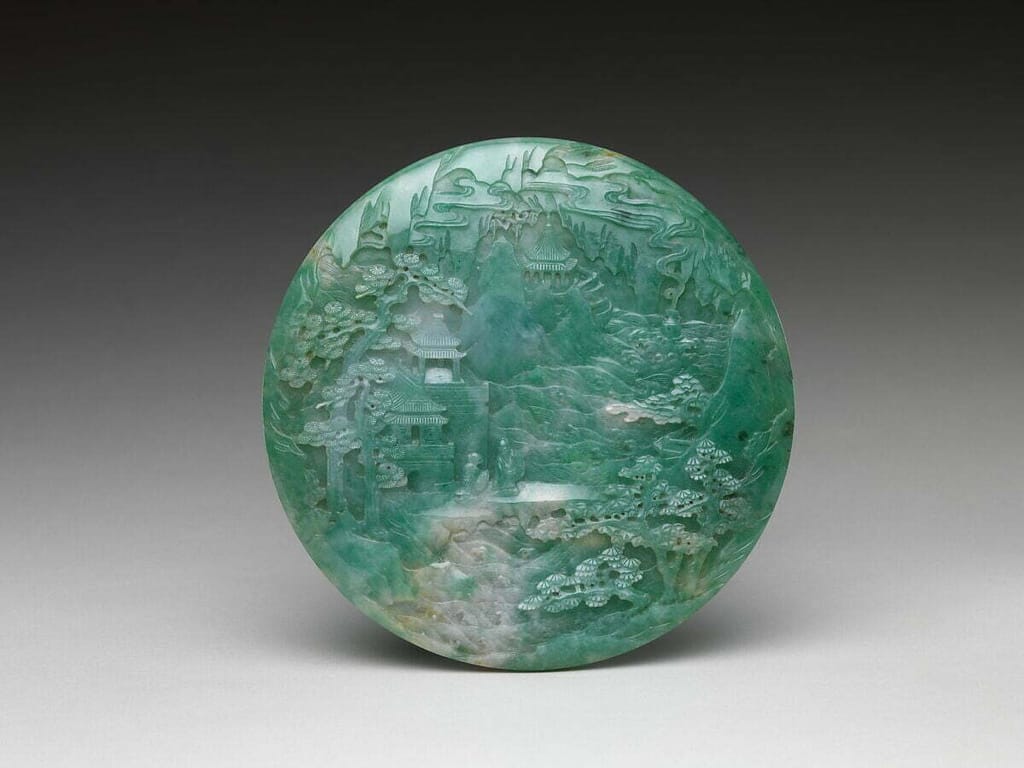
The Birth of the Term “Jade”
The term “jade” traces its roots back to ancient civilizations in Mesoamerica and China. This gem was cherished for its captivating beauty and spiritual significance. The English term “jade” is derived from the Spanish phrase “piedra de ijada,” translating to “stone of the loin” or “stone of the side.” This name was given due to the belief that this stone could cure ailments related to the kidneys.
Two Distinct Minerals: Jadeite and Nephrite
The term “jade” now encompasses two distinct minerals: jadeite and nephrite. These minerals were often confused due to their similar appearance and physical properties. However, in the 19th century, French mineralogist Alexis Damour distinguished jadeite as a separate mineral from nephrite.
Jadeite vs. Nephrite: Understanding the Differences
Although jadeite and nephrite share some similarities in appearance and physical properties, they differ in chemical composition, crystal structure, and rarity. Jadeite, a pyroxene mineral, consists primarily of sodium and aluminum silicate. On the other hand, nephrite, an amphibole mineral, is made up of calcium, magnesium, and iron silicate. Jadeite’s crystal structure is more tightly packed than that of nephrite, giving it greater density and hardness.
The finest-quality jadeite, known as Imperial green jadeite, is highly prized for its intense, even green color. It is considered more valuable than even the highest-quality nephrite due to its vivid colors, finer texture, and higher degree of transparency.
Jadeite in History and Culture
Jadeite has been revered by various cultures throughout history for its beauty, durability, and symbolic significance. In ancient China, it was associated with the virtues of wisdom, purity, and compassion. It was used to create ceremonial objects, burial items, and fine jewelry for the imperial court. Jadeite was also highly valued by the ancient Maya and Olmec civilizations of Mesoamerica, where it was used in religious ceremonies, as a symbol of power, and for creating intricate sculptures and adornments.
In modern times, jadeite continues to be highly valued and sought after for its beauty, symbolic meaning, and cultural significance. Its popularity has spread worldwide, and it is now an essential gemstone in both Eastern and Western jewelry designs.
Properties of Jadeite
Jadeite is a unique gemstone with a distinctive set of properties that set it apart from other gemstones. Understanding these properties is crucial for recognizing and appreciating the true beauty and value of jadeite jade.
Jadeite’s Chemical Composition and Crystal Structure
Jadeite, a pyroxene mineral, is primarily composed of sodium and aluminum silicate. Its chemical formula is NaAlSi2O6. Trace elements like iron, chromium, and vanadium contribute to its color variations. Jadeite’s crystal structure is monoclinic, meaning it has a single two-fold axis of symmetry. This tightly packed structure imparts jadeite with its characteristic toughness and durability.
Physical and Optical Characteristics of Jadeite
Jadeite exhibits a Mohs hardness of 6.5 to 7, making it a relatively hard and durable gemstone, suitable for jewelry and carving. Its exceptional toughness, or resistance to chipping and breaking, is due to its interlocking crystal structure. With a specific gravity of 3.3 to 3.5, jadeite has a substantial feel in hand, which is relatively high for a gemstone.
Optically, jadeite has a refractive index of 1.66 to 1.68 and is typically translucent to opaque. Its luster ranges from vitreous (glass-like) to greasy, and it often exhibits a fine, fibrous texture.
Colors and Varieties of Jadeite
Jadeite is celebrated for its wide range of colors, including green, lavender, white, yellow, orange, red, black, and gray. The color of jade is determined by the presence of trace elements in its crystal structure. The most valuable color of jadeite is Imperial green, a highly saturated, even green color.
Jadeite also comes in several varieties characterized by unique patterns and textures. These include:
- Moss-in-snow jadeite: This variety features bright green patches or veins on a white or translucent background, resembling moss on a snowy surface.
- Ying yu: Also known as “shadow jade,” this variety has a semi-transparent, grayish-green color with a smoky or shadowy appearance.
- Fei cui: A type of jadeite with a bright, translucent green color that is highly valued in Chinese culture.
Jadeite vs. Common Lookalikes and Imitations
Due to its popularity and value, jadeite is often imitated or confused with other gemstones and materials. Some common jadeite lookalikes and imitations include:
- Nephrite jade: While both jadeite and nephrite are considered jade, jadeite is generally more valuable due to its finer texture and greater range of vivid colors.
- Serpentine: A group of minerals that can resemble jadeite in color and appearance, but is softer and less dense.
- Aventurine: A variety of quartz that can resemble green jadeite, but has a distinctive “aventurescence” or shimmering effect due to the presence of mica or other inclusions.
- Glass, plastic, and other man-made materials: These imitations can be molded and dyed to resemble jadeite, but lack its natural beauty, durability, and metaphysical properties. These are easily told apart from a scratch test.
Familiarizing yourself with the differences between real and fake jade can also help you make informed purchasing decisions.
Synthetic Jadeite: A Rare Occurrence
While synthetic jadeite does exist, it is relatively rare and not commonly used in jewelry or decorative items. Synthetic jadeite is created through a process called hydrothermal growth, which involves dissolving natural jadeite in a high-pressure, high-temperature water solution and then allowing it to recrystallize. The resulting synthetic jadeite can be difficult to distinguish from natural jadeite, but it typically lacks the fine, fibrous texture and natural inclusions found in genuine jadeite.

Exploring the Spectrum of Jadeite Colors
Jadeite is renowned for its diverse color palette. While the most coveted jadeite color is the vibrant “Imperial green,” jadeite can be found in a wide array of hues, each with its unique charm and appeal.
Green jadeite, the most common variety, ranges from light to dark shades, with the emerald-green, also known as “Imperial jade,” being the most prized. The intensity and evenness of the green color significantly influence the gem’s value.
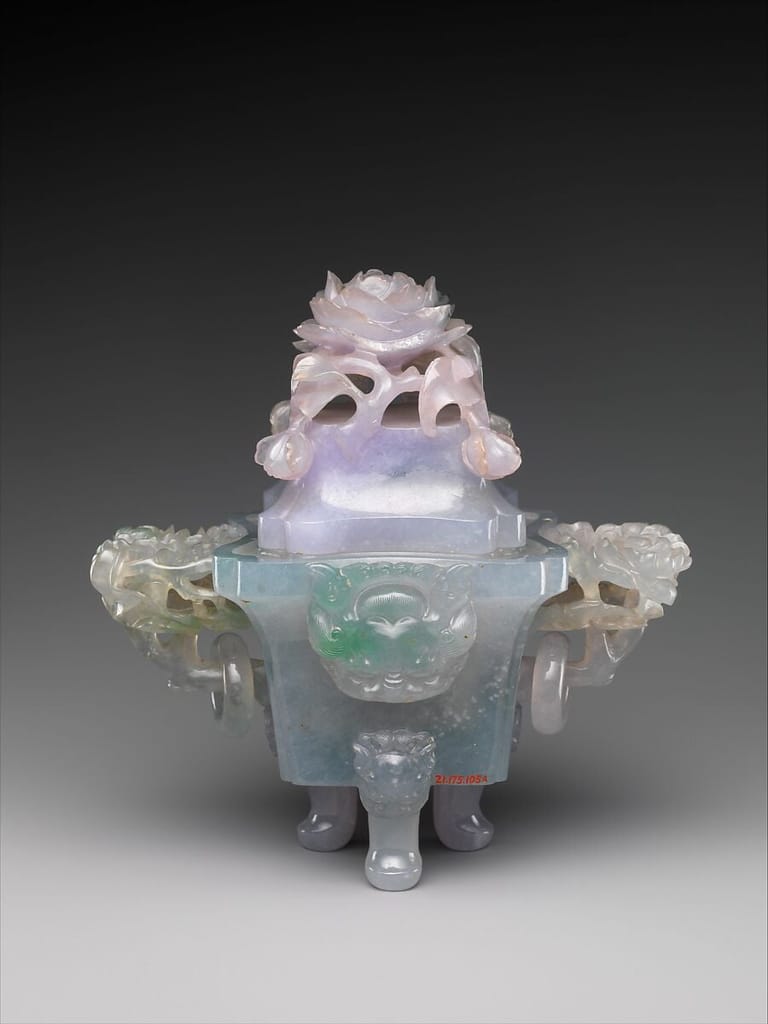
Apart from the iconic green, jadeite also comes in lavender, a color highly esteemed, especially in Asia. Lavender jadeite ranges from a soft, lilac hue to a more intense royal purple.
White jadeite, known for its purity and serenity, is another popular choice. It often serves as the backdrop for the “moss-in-snow” jadeite, where vibrant green veins or spots adorn a white or translucent background.
Jadeite also appears in less common colors like red, orange, yellow, brown, gray, and black. These colors are typically less valued than green and lavender but can still be quite striking and unique.
Remember, the beauty of jadeite lies in its variety. Each piece of jadeite, regardless of its color, carries its unique charm and character. Whether you prefer the classic green, the elegant lavender, or the unique black, there’s a jadeite color that will resonate with your personal style and preference.
Decoding the Quality Factors and Value of Jadeite
The “Four Cs” of Jadeite: Color, Clarity, Cut, and Carat Weight
The value of a piece of jadeite is influenced by several factors, often referred to as the “Four Cs” of jadeite: color, clarity, cut, and carat weight.
Color: The Heart of Jadeite’s Value
Color is the most crucial factor in determining jadeite’s value. The most prized jadeite exhibits a vivid, intense green known as “Imperial green.” However, jadeite comes in a broad spectrum of colors, and the value can fluctuate based on the saturation and uniformity of the color.
Clarity: Transparency and Purity
Clarity refers to jadeite’s transparency and purity. The finest jadeite is semi-transparent, devoid of visible inclusions or blemishes. However, certain inclusions can enhance jadeite’s beauty and value, such as the “moss-in-snow” effect, where bright green inclusions appear against a white or translucent background.
Cut: Showcasing Jadeite’s Beauty
The cut of jadeite can also influence its value. Jadeite is often fashioned into cabochons or beads, which highlight its color and translucency. Jadeite can also be carved into intricate designs and figures, which can elevate its value if the carving is of high quality.
Carat Weight: Size Matters, But Quality Rules
The size or carat weight of jadeite can also affect its value. Larger pieces of high-quality jadeite are rarer and hence more valuable. However, the quality of the jadeite is more important than its size. A small piece of high-quality jadeite can be more valuable than a larger piece of lower-quality jadeite.
Caring for Your Jadeite
While jadeite is a durable gemstone, it still requires proper care to maintain its beauty and value. Here are some tips for caring for your jadeite:
- Avoid exposing your jadeite to harsh chemicals or extreme temperatures, as these can damage the jadeite.
- Clean your jadeite with a soft cloth and mild soap. Avoid using ultrasonic cleaners or steam cleaners, as these can damage treated jadeite.
- Store your jadeite in a soft pouch or jewelry box to prevent it from getting scratched or damaged.
- If you’re unsure about how to care for your jadeite, consult with a professional jeweler or gemologist.
Embrace the Beauty and Symbolism of Jadeite
Jadeite is a gemstone of remarkable beauty, durability, and cultural significance. Whether you’re a seasoned collector or a first-time buyer, understanding the origins, properties, and value factors of jadeite can enhance your appreciation for this unique gemstone and help you make informed purchasing decisions.
Q: What is nephrite?
A: Nephrite is a type of jade and is a variety of the mineral actinolite. It is a type of ornamental rock, which is often used in jewelry.
Q: What is a crystal?
A: A crystal is a solid material, whose atoms and molecules are arranged in a highly ordered and repeating pattern, extending in all three spatial dimensions.
Q: What is a gemstone?
A: A gemstone is a precious or semi-precious stone that is cut and polished to be used in jewelry or other decorative purposes.
Q: What is nephrite jade?
A: Nephrite jade is a type of jade made up of the mineral actinolite and is generally found in colors from light to dark green.
Q: What are some common gemstones?
A: Some common gemstones include diamonds, sapphires, rubies, emeralds, and topaz, among others.
Q: What is crystal structure?
A: Crystal structure refers to the way the atoms, ions, or molecules are arranged in a crystal. It determines the physical properties of the crystal.
Q: What is Burmese jadeite?
A: Burmese jadeite is a type of jade that is considered the most valuable and desirable. It is found in Myanmar (formerly known as Burma) and is also known as “imperial jade”.
Q: What are some gem materials used in jewelry?
A: Some gem materials used in jewelry include diamonds, emeralds, rubies, sapphires, pearls, and jades, among others.
Q: What is the difference between jadeite and nephrite?
A: Jadeite and nephrite are both types of jade, but they differ in their chemical composition and physical properties. Jadeite is generally more valuable and comes in a wider range of colors.
Q: What is the toughness of jade?
A: Jade is a durable material and is known for its toughness. It has a fracture toughness that is higher than other gemstones, which means it is less likely to crack or break.
Q: What is Jadeite?
A: Jadeite is a rare and valuable mineral that belongs to a family of stones known as jades. It is a favored jewelry stone because of its unique and beautiful physical properties.
Q: What are the physical properties of Jadeite?
A: Jadeite is a hard, dense mineral that has a vitreous luster. It is composed of interlocking crystals that give it a smooth texture. Jadeite also has excellent translucence and can be found in various shades of green, including emerald-green, apple-green, bluish green, and yellowish green.
Q: Is Jadeite a type of gemstone?
A: Yes, Jadeite is a type of gemstone that is used for jewelry. It is highly valued for its beauty, rarity, and durability, making it a popular choice for luxury jewelry pieces such as jadeite bangles and pendants.
Q: Where is Jadeite mined?
A: Jadeite is mainly mined in Guatemala, Myanmar, and Japan, but jade can be found in other countries around the world. The most valuable form of jadeite is known as “imperial jade” and is found in Myanmar.
Q: When was Jadeite first discovered?
A: Jadeite was first discovered in 1863 by a French mineralogist named Alexis Damour. He identified it as a form of jade and named it “jadeitite.”
Q: What is the value of a Jadeite stone?
A: The value of a Jadeite stone depends on its color, transparency, and purity. The most valuable Jadeite stones are the ones that have a rich, emerald-green color and excellent translucence. These stones can cost thousands of dollars per carat.
Q: What are Jadeite bangles?
A: Jadeite bangles are bracelets made from jadeite. They are popular among collectors and jewelry enthusiasts because of their beauty and durability.
Q: What colors can Jadeite come in?
A: Jadeite can come in various shades of green, including emerald-green, apple-green, bluish green, and yellowish green. It can also be found in other colors such as lavender and black.
Q: What is the difference between Jadeite and Nephrite?
A: Jadeite and Nephrite are both types of jade, but they have different chemical compositions and physical properties. Jadeite is rarer and more valuable than Nephrite and is usually found in shades of green, while Nephrite is typically found in shades of green and white.
Q: How is Jadeite mined?
A: Jadeite is primarily mined from boulder deposits in mountainous regions. Pieces of jade are broken off from the larger boulders and then cut and polished into various shapes, including cabochon shapes for use in jewelry.