Jade has been cherished in China for over 5,000 years. The saying “gold is valuable; jade is priceless” reflects how deeply jade is embedded in Chinese culture. Both jadeite and nephrite fall under the term “jade,” with nephrite being more common historically in China. Jade has not only been used for its beauty but also for its symbolic meaning—representing virtue, wisdom, and spiritual harmony.
The History of Jade in China
Neolithic Period (ca. 5000–2000 B.C.)
Jade first emerged as a sacred material during the Neolithic period. Cultures like the Hongshan and Longshan in northeastern China produced jade artifacts such as the famous “pig dragons,” eagle pendants, and ritual objects. These pieces, often buried with the dead, suggest jade’s early spiritual importance.
Han Dynasty (206 B.C.E. – 220 C.E.)

Jade continued its significance during the Han Dynasty. Nobles were buried in elaborate jade suits, sewn together with gold or silver wire, which were believed to protect the soul in the afterlife. Jade was also carved into ceremonial weapons, jewelry, and status symbols.
Ming and Qing Dynasties (1368–1912)
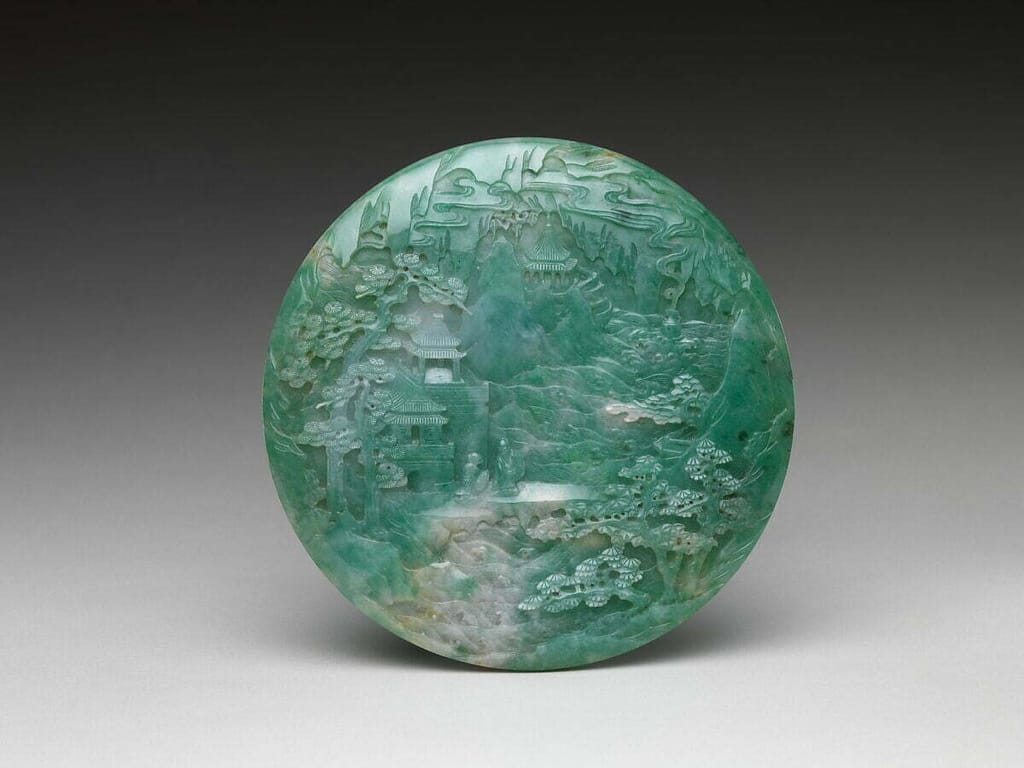
These dynasties marked the peak of jade artistry. Carvers produced intricate objects—from figurines and brush washers to elaborate table screens. The Qing Dynasty, in particular, was known for using high-quality jadeite imported from Burma. These pieces symbolized imperial wealth and Confucian ideals.
Modern China
Today, jade remains deeply valued. From jewelry to contemporary sculpture, Chinese artisans continue the tradition of jade carving, often blending traditional motifs with modern designs.
Types of Jade Used in China
Nephrite vs. Jadeite
- Nephrite: A calcium magnesium silicate, often found in shades of white, green, and brown. Predominant in ancient Chinese jade artifacts.
- Jadeite: A harder, more vivid variety introduced later (primarily during the Qing Dynasty). Imperial green jadeite, rich in chromium, is the most prized.
Hetian (Hotan) Jade
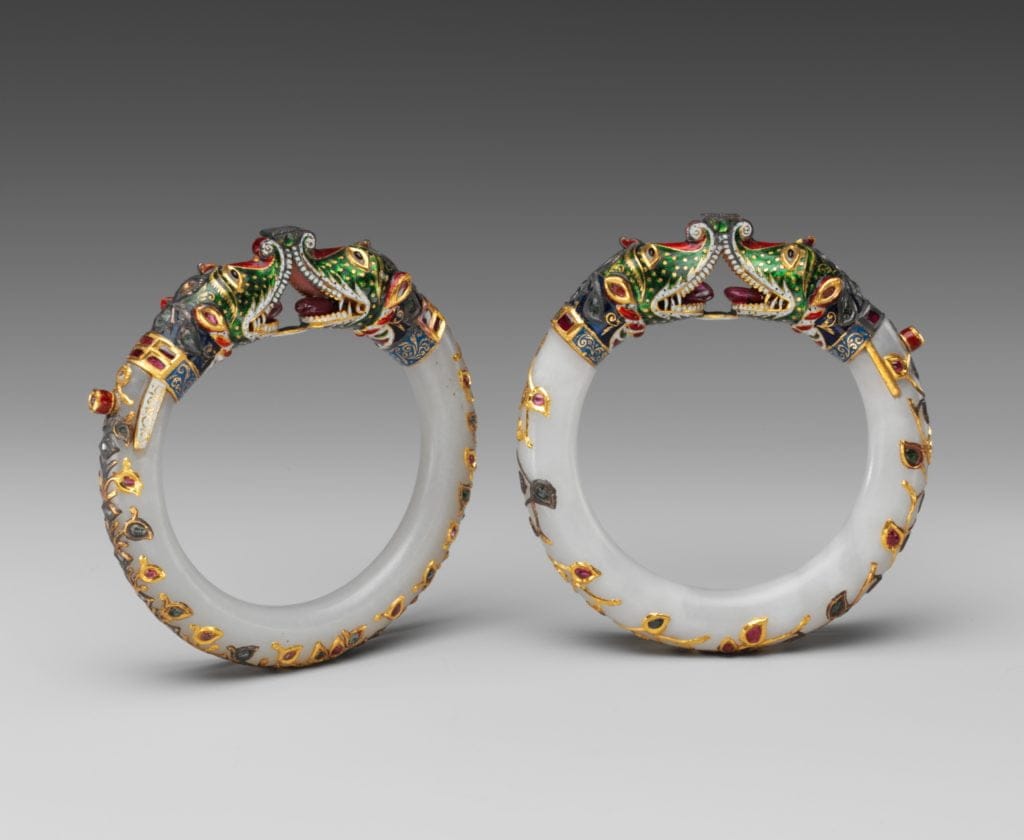
This nephrite jade from Xinjiang, China, is renowned for its creamy white “mutton fat” variety. It has been traded for centuries along the Silk Road and was favored for imperial use.
You can learn more about Green Jade and its healing properties and White Jade.
The Art of Jade Carving
Jade carving requires exceptional skill due to jade’s hardness. Ancient artisans used abrasives and manual tools, while modern tools allow for even more intricate designs.
Common motifs include:
- Bi discs: Representing the heavens
- Dragons: Symbolizing power and good fortune
- Lotuses and peaches: Representing purity and longevity
Learn more about how to tell real jade from fake jade to better appreciate the craftsmanship.
Symbolism and Cultural Beliefs
Jade symbolizes moral virtue in Confucian philosophy. Confucius likened jade to a gentleman—soft yet strong, beautiful yet unyielding.
- Worn as amulets to protect against evil
- Used in rituals for purity and connection with heaven
- Seen as a representation of status and scholarly integrity
Iconic Jade Artifacts
- Bi discs from Neolithic tombs remain one of the biggest mysteries
- Jade burial suits of the Han Dynasty are iconic testaments to belief in jade’s protective power
- Qing Dynasty table screens and brush pots demonstrate artistic mastery
You may also enjoy our deep dive into Where Jade is Found.
FAQs about Chinese Jade
What is Chinese jade made of? Chinese jade is usually either nephrite or jadeite. Nephrite is more traditional, while jadeite came into prominence in later dynasties.
Why is jade important in Chinese culture? Jade symbolizes purity, virtue, and immortality. It’s more than a gemstone—it’s a spiritual and cultural icon.
Where is jade found in China? Significant sources include Xinjiang (Hetian), Liaoning, and historically, other regions now depleted.
What are the most famous types of jade?
- Mutton fat jade (Hetian white nephrite)
- Imperial green jadeite
- Hongshan pig dragons
Chinese jade is more than a mineral—it is an embodiment of Chinese philosophy, art, and spiritual heritage. From Neolithic tombs to modern jewelry, jade continues to inspire and captivate. As Confucius said, “When I think of a wise man, his merits appear to be like jade.”
Would you like to explore jade’s symbolism in modern accessories? Check out our section on Wearing Jade for more.